17% Fewer Babies Born in China in One Year, Birth Rate at Lowest Level Since Records Began
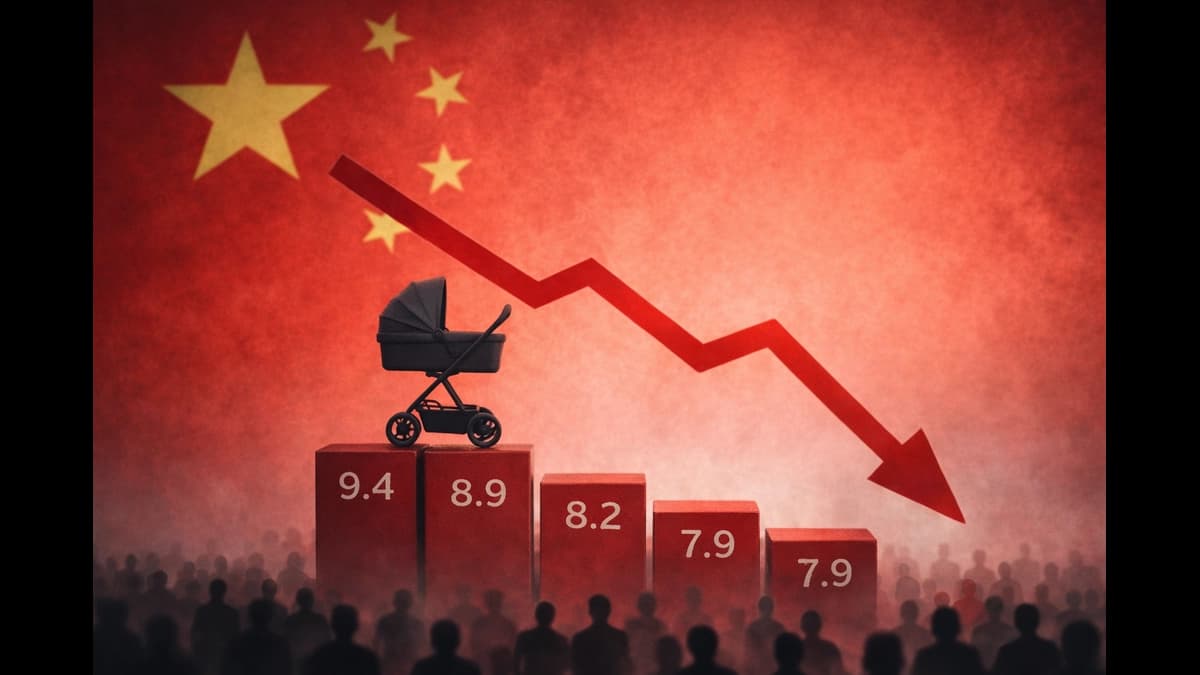
China’s population crisis is deepening. In 2025, the number of babies born in the country fell by 17 percent, pushing the birth rate to its lowest level since 1949. According to official data, only 7.9 million babies were born in 2025, compared to 9.4 million in 2024 — a decline of 1.5 million births in just one year.
As per the National Bureau of Statistics, China’s total population decreased by 3.39 million in 2025, bringing it down to 1.4049 billion. This marks the fourth consecutive year of population decline. Excluding the famine period of 1959–61, this is considered the steepest annual fall. After 1949, 2025 recorded the lowest number of births.
China’s birth rate has dropped to 5.63 per thousand, while the fertility rate has fallen close to 1. A fertility rate of 2.1 is considered necessary to maintain a stable population.
Why is the Population Declining?
Experts say the main reason is the growing distance of young people from marriage. In 2024, marriages declined by around 20 percent, directly impacting the birth rate. Although some temporary improvement is expected due to relaxed marriage rules in 2025, economists believe the impact will be limited.
According to Xu Yu, Principal Economist for China Affairs at the Economist Intelligence Unit, rising economic pressure, expensive education, the high cost of raising children, and especially the cost for women of leaving their careers are major reasons behind the falling birth rate.
The situation is further aggravated by China’s rapidly aging population. Currently, 23 percent of the population is above 60 years of age, and it is estimated that by 2035 this number will reach 400 million. This will reduce the workforce and increase pressure on pension and healthcare systems.
Steps Taken by the Government:
To tackle the situation, the government has allowed two- and three-child policies, introduced subsidies of 3,600 yuan per child, reduced taxes for pregnant women, and provided tax exemptions on daycare and matchmaking services.


