Bulgaria Adopts Euro Nearly 20 Years After Joining the European Union
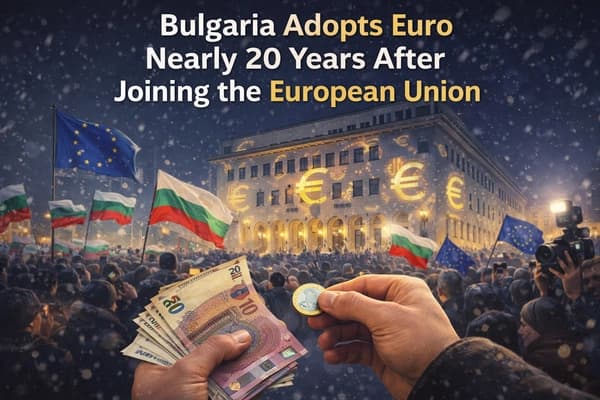
Bulgaria officially switched to the euro on Thursday, becoming the 21st member of the eurozone almost two decades after joining the European Union. The landmark decision has drawn both celebration and concern across the Balkan nation.
At midnight, Bulgaria discontinued its national currency, the lev, which had been in circulation since the late 19th century. To mark the historic transition, euro symbols and coins were projected onto the central bank building in Sofia. European Central Bank President Christine Lagarde welcomed Bulgaria into the euro family, describing the common currency as a powerful symbol of unity, shared values, and collective strength.
Public reaction to the changeover has been divided. While supporters see euro adoption as a boost for economic stability, stronger integration with Western Europe, and reduced vulnerability to external influence, critics fear the move could trigger higher prices and deepen political uncertainty.
In a televised address shortly before midnight, Bulgarian President Rumen Radev described the euro switch as the final step in Bulgaria’s European integration journey. Despite freezing temperatures, large crowds gathered in Sofia to celebrate the New Year and the currency transition.
However, President Radev also expressed regret that the decision was not put to a public referendum. European Commission President Ursula von der Leyen called Bulgaria’s entry into the eurozone an important milestone for the country and its citizens.


