What are rare-earth elements and why are they in such high demand?
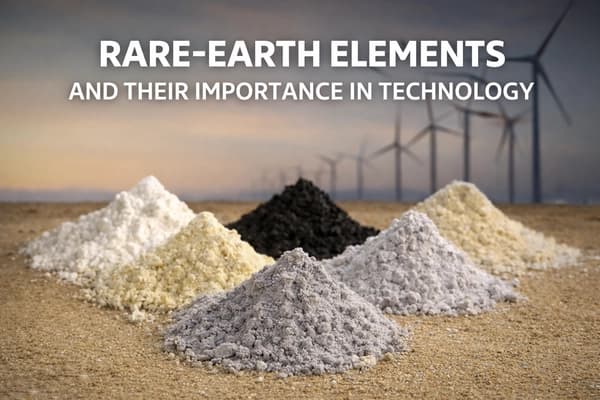
Rare-earth elements are a group of 17 metallic elements that play a critical role in modern technology. This group includes 15 lanthanides, along with scandium and yttrium. Although these elements are not extremely rare in the Earth’s crust, they are usually found in very low concentrations and mixed together, making extraction and separation difficult and costly.
The global interest in rare-earth elements has increased sharply because they are essential for many advanced and green technologies. These elements are widely used in electric vehicles, wind turbines, solar panels, smartphones, computers, and defence equipment. High-performance magnets made from rare-earth elements are crucial for motors, generators, and renewable energy systems.
Rare-earth elements also have important applications in lighting and display technologies. They are used in phosphors for LED lights, television screens, and smartphone displays. In addition, they are required for lasers, optical devices, glass polishing, ceramics, catalysts, and specialised industrial materials.
Mining and processing rare-earth elements is complex and environmentally sensitive. After extraction, the ore undergoes multiple chemical processes to separate individual elements, as many of them have very similar chemical properties. This process can produce hazardous waste, including radioactive materials, which must be handled carefully.
As countries shift towards clean energy and advanced manufacturing, the demand for rare-earth elements continues to rise. This has made them strategically important resources, influencing global trade, supply chains, and geopolitics. Ensuring secure and sustainable access to rare-earth elements has become a key priority for many nations.


