Breaking the Cycle of Exam Stress
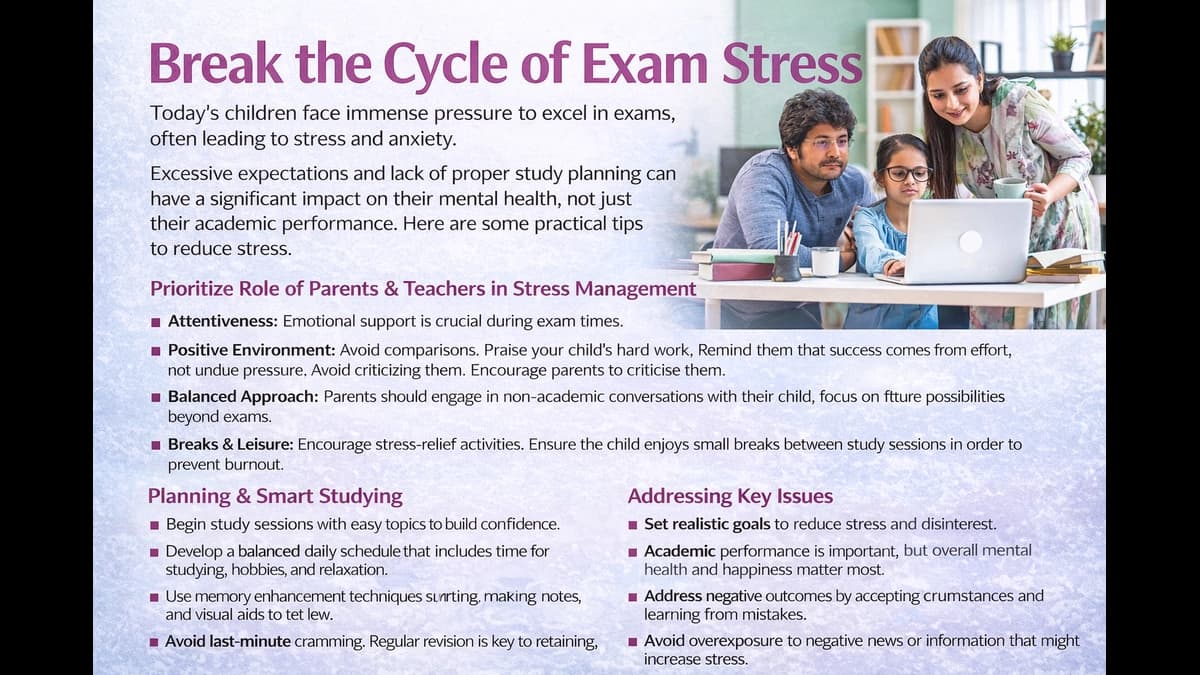
Children today often carry a heavy burden of expectations about proving their abilities. In many cases, pressure from parents unintentionally adds to this stress. This constant tension not only affects exam performance but also takes a toll on a child’s mental and emotional health. However, with the right support, this cycle of exam pressure can be broken.
Voices from Parents
Neeta, whose 15-year-old son is preparing for board examinations, says her child was once enthusiastic about learning but now feels overwhelmed. Long study hours, lack of rest, and fear of results have replaced his earlier curiosity. Similarly, Asha Srivastava, mother of a 16-year-old girl, shares that her daughter remains anxious most of the time, worried about failing expectations tied to her academic performance and future prospects.
Such experiences are becoming increasingly common across the country. Reports show that in 2023 alone, nearly 13,900 students reached out to mental health helplines for support. Experts estimate that close to 80 percent of school-going children experience stress related to exams, grades, or parental pressure. Recognizing the seriousness of the issue, mental health counseling has now been made mandatory in many schools.
Practical Ways to Ease Exam Stress
Maintain balance: A healthy mix of study, play, and rest helps children stay mentally refreshed.
Encourage, don’t compare: Motivation works better than constant comparison with peers.
Study smart: Planned study schedules and regular revision are more effective than last-minute cramming.
Promote healthy habits: Proper sleep, nutritious meals, and reduced screen time support better focus.
Use school resources: Teachers and counselors can provide guidance and emotional support.
Recognizing Warning Signs
Persistent worry, poor concentration, mood swings, sleep disturbances, headaches, or withdrawal from friends may signal exam-related stress. Early attention and professional guidance can prevent these issues from worsening.
Shared Responsibility of Parents and Teachers
Every child learns differently and progresses at their own pace. Unrealistic expectations often create fear of failure. Parents and teachers must work together to build confidence, appreciate effort, and encourage overall growth rather than focusing only on marks.
Looking Beyond Exams
While examinations play an important role, they are only one part of a child’s journey. Emotional well-being, self-belief, and life skills are equally vital. With understanding, realistic goals, and consistent support, children can approach exams with confidence instead of fear.


